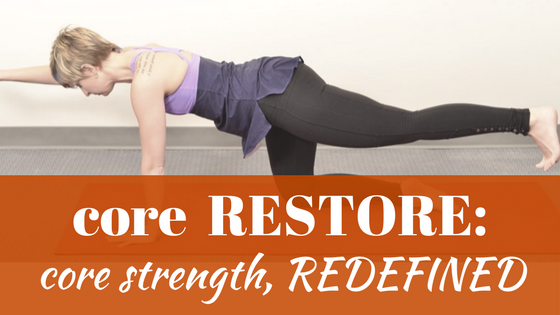
Welcome to your first class Round-up.
As I mentioned in the previous e-mail, our goals are lofty, and our time together time is short.
On the weekly basis, please read carefully through included information and do the assigned homework to get the most juice out of our class time together.
It helps when we
don't have to go back to basic concepts over and over and over again.
Structurally, moving forward is impossible if the majority of the class is struggling with the foundational pieces, so even if you find it difficult to do the homework for yourself, please do it for your class mates!
Here are some hard truths about core
training:
- True core strength is fluid and flexible; it allows you to move and breathe freely at the same time.
- Your breathing and your core stability are intrinsically connected. Tension in your breath will make its way into tension within your core and vice versa, creating restriction and tightness in the whole body.
- The pelvic
floor has a lot to do with your core. It is the center of your core stability and the foundational support of your abdominal organs. Pregnancy and childbirth, acute and chronic low back pain, an episode of stomach flu and even your bathroom habits will affect the functioning and tonus of your pelvic floor, and therefore your stability.
- Relaxation is crucial and essential. Often we don’t under, but over-engage the core muscles, not only losing range and
fluidity of motion, but also making ourselves more susceptible to digestive problems, constipation, bladder infections, and pelvic pain.
- Uncovering the hidden tensions within the core is essential for women: many women respond to hormonal fluctuations by developing chronic tensions in the wrong abdominal corset.
This week's structural
theme:
- Connecting pelvic stability to hip mobility
- Understanding neutral pelvis
- Stable pelvis in movement
This week's off - the - mat challenge:
- As you bend over(maybe to pick up your toddler or groceries), can you identify whether your movement starts from the hips or someplace else?
- Does you walking gait involve moving from the hips (do you feel your leg bones swinging to and fro?) or some other swiveling / swinging / sashaying movement?
- When you walk up or down the stairs, does
your pelvis tilt side to side? Do you load both legs evenly?
This week's breathing practices:
- Ball breathing - 3 zones: diaphragm | mid belly | low belly
- Turbo breathing for low abdominal area
This week's on - the - mat movement challenge:
Additional Printouts / Worksheets: