Welcome to this week's Friday
Round-up.
This week's structural themes:
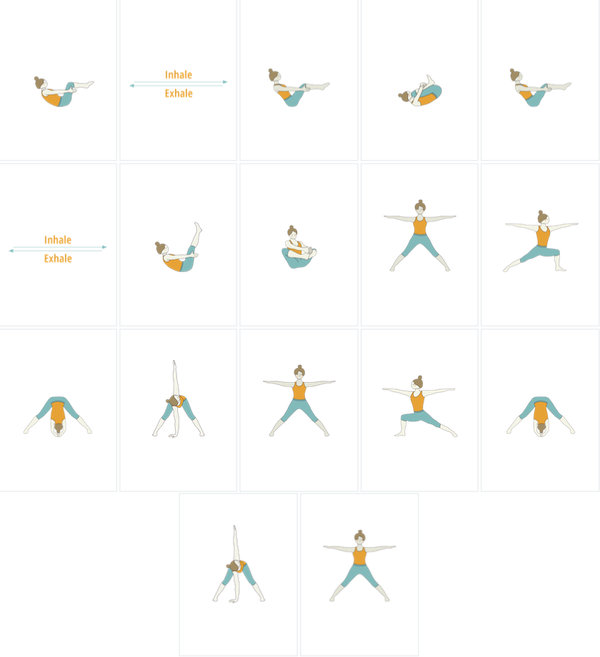
- moving from the hips: wide-legged postures
- connect upper and lower body
- where are the abs and which ones do I use?
- butterfly pose | variations
Butterfly Pose:
Butterfly Pose is a nice way to stretch the lower back without requiring loose hamstrings. It can be a great first pose for almost any practice because it gently works into the hips and spine: there’s a gentle flexion of the hips and spine, some opening through the
groin, and a mild external rotation of the hips. Butterfly pose is simple enough to be accessible to even the very beginners, yet it offers a host of benefits:
- Being one of the primary Kidney – Bladder meridian poses, Butterfly is excellent for toning the kidneys, bladder, and prostate gland.
- This pose is helpful for pelvic floor and reproductive organ dysfunction: it can regulate periods, help ovaries function properly, and also remove heaviness in the
testicles.
- Butterfly is great for restoring the deep energy stores by toning the adrenal glands.
- Liver and Gall Bladder meridians are also affected by this pose, improving body’s metabolic function. Butterfly pose stimulates detoxification in a gentle way, without bringing on the fiery moods common after a more intensive Liver – Gall Bladder poses.
- As mentioned earlier, Butterfly pose opens and stretches low back and hips, without being overly
aggressive.
Here is how:
- Start by sitting on a yoga mat; choose a sitting posture that is comfortable enough to sit with your back straight, but not stiff or rigid. You might choose to elevate your hips by sitting on a folded blanket – this will create a better base of support for your spine, while preserving circulation to your legs and feet. You may close your eyes if you wish. Stay here for about a
minute, observing the natural flow of your breath: take a note of the depth, length and effort required for your inhalation and exhalation.
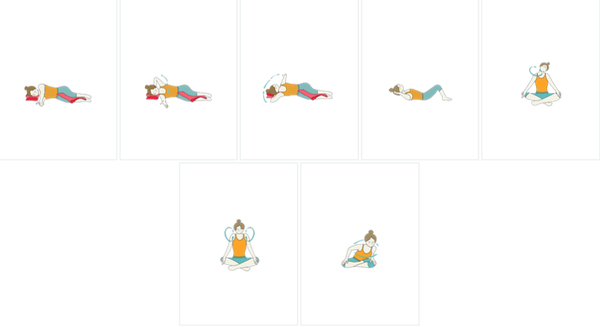
- Now stretch your legs forward, and then bend your knees, opening the knees to the sides and bringing the soles of the feet together. Slide your feet away from your groin, forming a diamond shape between your feet and groin. Place your hands behind you, and with your fingertips press the floor away while allowing your hips to
rotate forward.
- Pause here; if your hips have a tendency to rotate back (place one hand onto your lower back to check if it feels rounded), elevate your hips by sitting on one or several folded blankets. If you have any lower back disorders that do not allow your spine to round, then stay here or do a reclined version (Lie down, while keeping the legs in butterfly; support the knees with folded blankets; you can also place a folded blanket under your lower back for more
comfort.) For those with knee sensitivity, supporting the knees with folded blankets or bolsters eases both the knee join and the mental fear of re-injury: fill the space between your knees and the floor so you feel safe and well supported.Notice your breath and sensations in your body: if you breath has deviated from it’s natural rhythm or you are experiencing strong sensations, stay here for several breaths or for the whole duration of the pose.
- If/when you are ready to explore
further, allow your back to round forward, and head to relax down, while lightly resting your hands on your feet or the floor. Monitor the rhythm of your breath as you move deeper into the pose, and pause, or even stop the process if needed whenever your breath becomes short, shallow or interrupted. Avoid using your arms for leverage; rather, allow the pose to unfold naturally. Look for a uniform broad stretch – any sensation that feels like a sharp point is an indication that you’ve moved too
far into the pose. Once you’ve found your edge – a place where sensations are strong, but bearable, stop and settle in, allowing your body to acclimatize to the shape.
- Since we are spending relatively long period of time in a pose, it makes good sense to support the head, unless your head is resting on the floor or your feet. You can use a block or a bolster placed over your feet to support your forehead. Alternatively, position your bent elbows against your shins and support
your head with your hands. Avoid dropping the head forward if the neck has suffered whiplash or has reverse curvature.
- Allow your body to move into the pose to your appropriate edge, where (strong) sensations are present, yet you don’t feel overwhelmed or alarmed. A good question to ask yourself here is: “Do I feel safe?” Once settled, become still, muscularly unengaged, but stretched. Soften mental resistance to the experience; rather then fidgeting and trying to
adjust your position to “how this pose should feel,” (unless, of course, you don’t feel safe, in which case revisit the props you are using) simply continue to notice your breath. Whenever strong sensations threaten to flood your mental space, or your mind gets bored and begins to wander, come back to your breath. Notice your breath just like you did before you moved into the pose, and keep coming back to your breath whenever distractions arise.
- Hold the pose for 1-5
minutes; if you are new to holding poses, start with a 1 minute hold and slowly build from there. To come out of the pose, use your hands to push the floor away and slowly roll up. Lean back on your hands to release the hips first, and then slowly straighten one leg at a time. Whenever we end the pose we’ve held for a while, it is important to pause in a neutral position (here, with your legs outstretched forward), to allow your body to nourish the area we’ve just
stressed.
This week's breathing practices:
Three Part Exhale Breath
Sitali Breath ( in some classes) - I will have the write up for this cooling breath next
week!
Movement focus by class:
Pain Care Yoga: This week we use body scanning practice to understand and apply the principle of
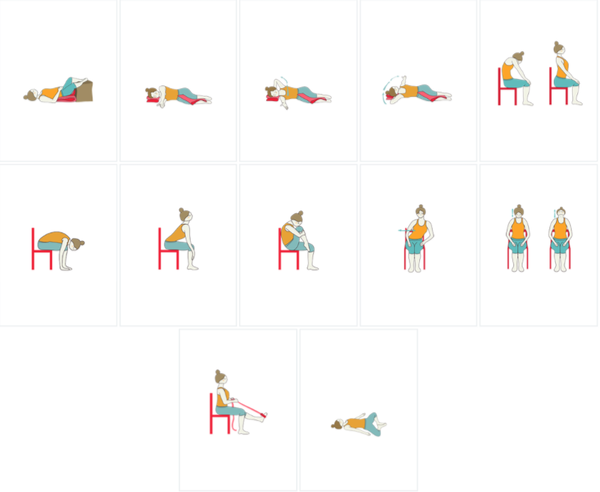
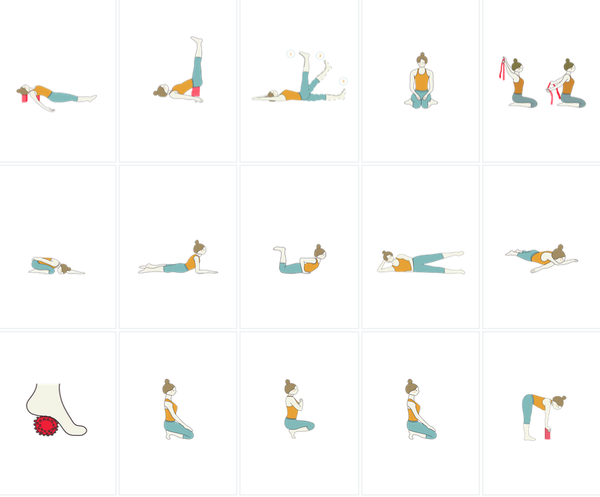
baseline. More info on baseline and pacing is here. We also modified the butterfly pose (described above) to the floor model for safer operations - all the benefits still apply!
Corrective Movement Yoga:
From the chair and onto the mat, connecting upper body, lower body and the
core.
Gentle Beginner Yoga
Stability, balance, and a wide-legged twist!
Yin + Ball Yoga
Wild things for feet and shoulders!
See you on the mat!
Julia + Satori Team |
|
|