Pain Care Yoga:
Scientists used to think that there's just one pain center in the brain.
Now, with the help of functional imaging we've learned that there are many areas of the brain
that are involved in pain processing. The oversensitive areas in the brain can be hijacked by the pain are:
~ premotor / motor complex - organize and prepare for movements
~ cingulate cortex - concentration and focusing
~ prefrontal cortex - problem solving, memory
~ amygdala - fear, fear conditioning, addiction
~ sensory complex - sensory descrimination
~ hypothalamus / thalamus - stress response,
self-regulation, motivation
~ cerebellum - movement and cognition
~ hippocampus - memory, spatial cognition, fear conditioning
As you can see, pain can hijack the clusters of nodes in the brain that are used for sensation, movement, emotions and memory.
When pain persists, some of these nodes become very sensitive and begin to react from the slightest trigger.
The particular pattern of brain
activity which creates the perception of pain is called a "neurotag" for pain.
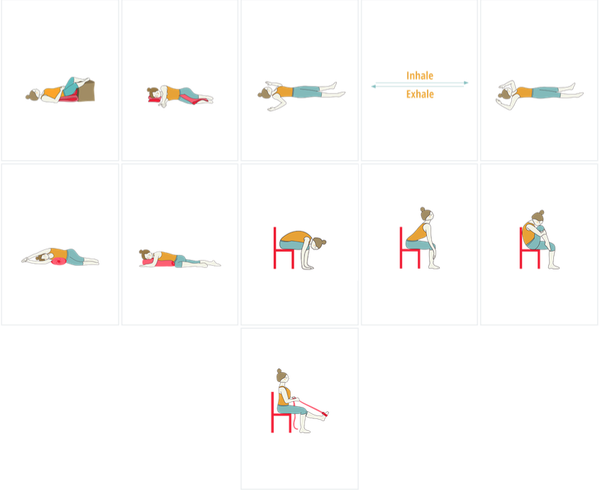
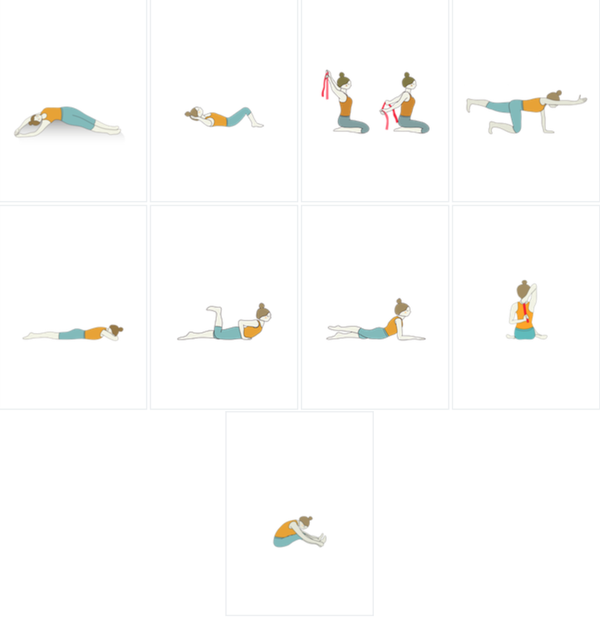
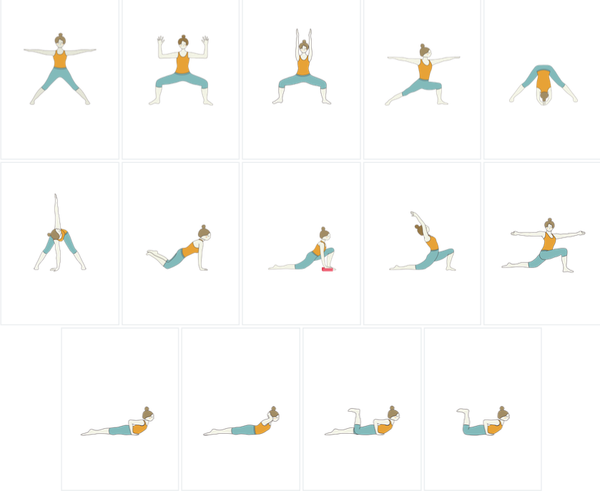
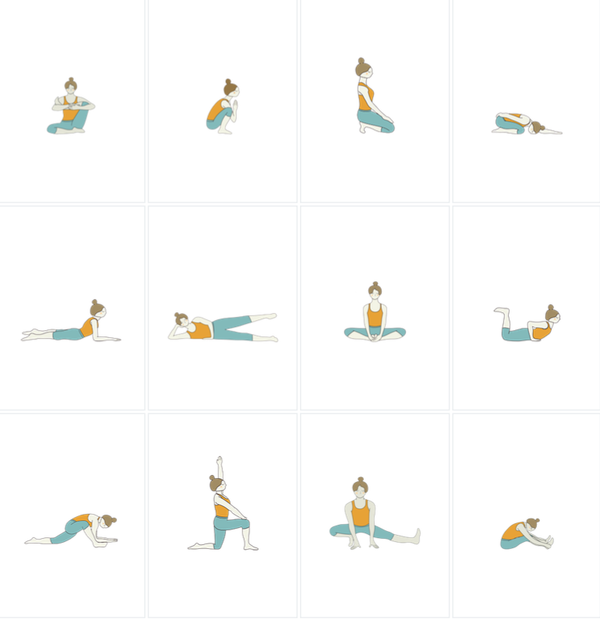
When we get on the mat, we begin to challenge the pain neurotag and disconnect the pain producing brain activation patterning. Changing our positions on the mat - in relationship to gravity - is one of the many ways of challenging the pain neurotag.