In the culture that equates thinness and fitness to
health, jarring and over-aggressive approach to movement and exercise is pretty much a norm.
We somehow have been convinced that adding an hour or two of highly repetitive exercise and linear movement to our otherwise movement-starved lifestyle can somehow erase the negative impact of inactivity.
Well, here is the
thing: the more you do the same thing over and over again, the stronger some of the areas of your body become. Strength in one area increases relative weakness of the surrounding areas not strengthened. Having strong body parts right next to underused and weak ones can actually increase tissue damage.
You might, of course, think of cross
– training – an excellent thought, in theory. In practice, however, it gets tricky: unless you are cross-training under a watchful eye of a movement teacher, you will carry every single compensation pattern with you from one activity and into another.
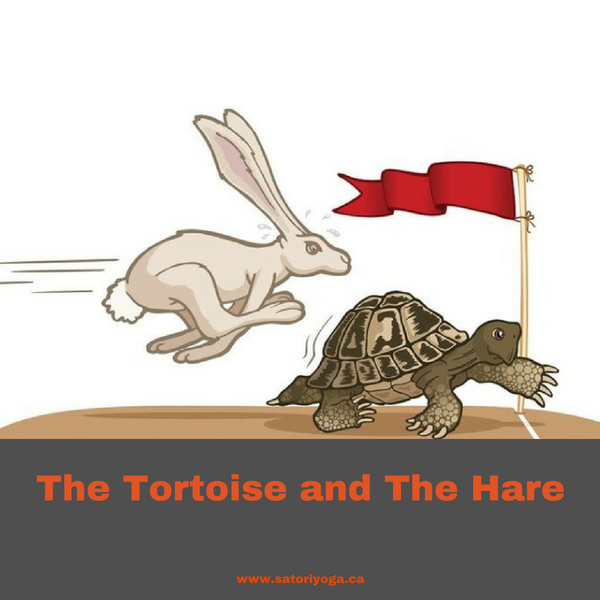
And then there’s a matter of progression: human nervous system likes to maintain some
sort of equilibrium. It might not be the healthiest setting, but a stable point nonetheless. In order for improvements to take hold, progression needs to be slow and steady. Change too fast and the nervous system bucks, throwing you right back to square one – where you started.
What I’m getting at is this: nowadays, most of us, regular folk,
are movement deprived/malnourished, and the state of our bodies – joint mobility and loading, muscle length and strength, and even our ability to breathe fully are compromised at best, and dysfunctional at the worst.
Yet, the thought of “getting back at it” arrives, and we flock to all sorts of movement classes, cranking our poorly aligned joints and short, stiff muscles into unfamiliar ranges of motion time after time after
time - moving without awareness, while totally ignoring any notion of graduated exposure or appropriate pacing.
Is it any wonder we keep hurting ourselves more and more – eventually giving up movement practices all together and sinking, complacently, into our chairs?