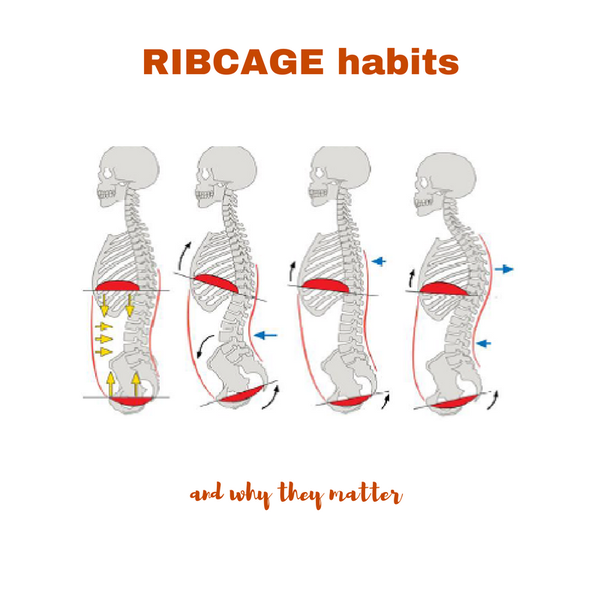
In a neutral alignment the rib cage sits directly atop of the upper part of pelvis.
One of the most common postural compensation is rib cage misplacement - rib cage that is shifted ahead or behind of the pelvis, or skewed / twisted to one side or
another.
Here is what happens on the inside when the rib cage moves out of alignment:
Pelvis to rib cage alignment is crucial, because when these two do not match up, the spinal bones between them become stressed and improperly loaded.
Compromised rib cage alignment leads to compromised function through hips and shoulders.
It is quite likely that you’ll drive your hip and shoulder movement from your back.
One cannot move efficiently through hip and shoulder girdle, unless he / she is able to use the big muscles of the hips and shoulders (gluts, hams, quads, biceps, triceps) to drive the movement.
When the rib cage is out of sorts, it is very challenging - if at all possible - to find and engage the correct abdominal muscles for stability.
And finally, rib cage shifts change the line of pull on respiratory diaphragm - which affects the intra-abdominal pressure and stabilization of the lumbar area ( amongst other yucky
things).