Fall 2017 | Pain Care Yoga | Week 7 | Breath and Pain: Try The Gasp Test

Published: Fri, 10/20/17

Hey

You already know - from Pain Care Round-Ups and also first hand, from the mat practice - that breath can change our perception of pain.


And, if you had a chance to read through today's general class round - up, you have an idea how sticky and inefficient breathing patterns can alter our reality.


Here is a quick way to test whether the way that you breathe contributes to your pain perception.

 
The GASP TEST:
 

Gasp text is actually super simple:

1. Notice and rate your pain on the scale from 1 to 10, 1 being the lowest.

2. GASP like you've had an unpleasant surprise.

3. Pay attention to what gasping does: does it increase your pain level or change the quality of pain?

If you experienced a sharp increase in pain levels or a change in pain experience ( as in from dull to a sharp, for example), you can say with certainty that your breath is contributing to your pain levels.


Persistent and recurring pain changes the way we breathe.


We hold our breath when we move or getting ready to move.

More often than not,  we hold our exhale.

With time, this pattern of holding or uneven breathing becomes ingrained - we simply no longer aware of how we breathe.

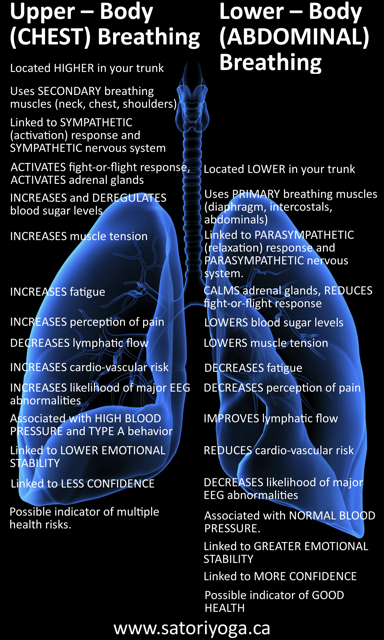
Erratic patterns of breathing contribute to body wide tension, and also continuously push our nervous system into the fight - flight mode, thus creating a negative feedback loop.

Upper body breathing can also contribute to feelings of anxiety, which also perpetuate pain.

Here is what happens when we breathe well:


  • Smooth, rhythmic breathing increases serotonin production.

  • Healthy breathing creates vital structural support for your back (especially lumbar spine) as well as your shoulders.

  • Healthy breathing relaxes tight neck muscles, can prevent reoccurring headaches and migraines, as well as assist a better thyroid function.

  • Healthy breathing can release mid-back tension.

  • Healthy breathing massages (no joke!) your heart, lungs, as well as your digestive organs, assisting better digestion and elimination.

  • Healthy breathing patterns are absolutely necessary in the prevention + treatment of pelvic floor disorders

  • Healthy breathing is also required for a healthy function of the nervous system (including your brain), appropriate blood oxygen saturation, and reduced pain perception.
 
See you on the mat!
Julia + SATORI YOGA TEAM