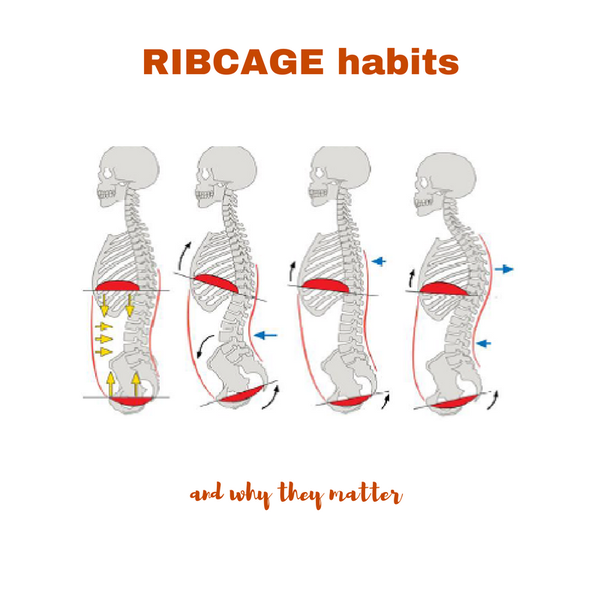
In a neutral alignment the rib cage sits directly atop of the upper part of pelvis.
One of the most common postural compensation is rib cage misplacement - rib cage that is shifted ahead or behind of the pelvis, or skewed / twisted to one side or
another.
I wanted to pause and reiterate that no matter how and where you compensate, misaligned structures are not enough to create persistent pain. There are plenty of people who live with grossly distorted spines and have no pain.
Pain - especially chronic pain - is the production of the nervous system that reacts hyper - vigilantly to postural
misalignment and inefficient movement patterns (amongst other things; for some people, nervous system just reacts - with no rhyme or reason).
This means we need to approach pain management from AT LEAST two perspectives:
~ bettering our alignment and movement
~ toning the nervous system
The Core Restore class primarily focuses on the movement and alignment pieces of the puzzle.
These two {and especially movement} have an undeniable effect on the nervous system; however, addressing the nervous system directly through practices such as breathing re-patterning and mindfulness will not only generate an additional forward momentum, but will also add another layer of depth to your movement practice, and help you create changes that stick.
Now back to the rib cage bits:
Here is what happens on the inside when the rib cage moves out of alignment:
Pelvis to rib cage alignment is crucial, because when these two do not match up, the spinal bones between them become stressed and improperly loaded.
One cannot move efficiently through hip and shoulder girdle, unless he / she is able to use the big muscles of the hips and shoulders (gluts, hams, quads, biceps, triceps) to drive the
movement. Compromised rib cage alignment leads to compromised function through hips and shoulders. It is quite likely that you’ll drive your hip and shoulder movement from your back.
When the rib cage is out of sorts, it is very challenging - if at all possible - to find and engage the correct abdominal muscles for stability.
And finally, rib cage shifts change the line of pull on respiratory diaphragm - which affects the intra-abdominal pressure and stabilization of the lumbar area.
More on breathing, respiratory diaphragm, and their connection to stabilization in next week's
e-lesson.