No, I didn't completely lose my marbles {yet, anyway!} and send the wrong kind of message to the wrong kind of crowd.
So many of you have asked what kind of magic happens behind the closed
doors of CORE RESTORE class, I thought the easiest way would be to share exactly what we talk about.
Wait, wait, WAIT!
Before you delve in!
There is no point in giving you all this new + fabulous information unless there's a way to implement what you know and find a smarter way to move.
So here goes....
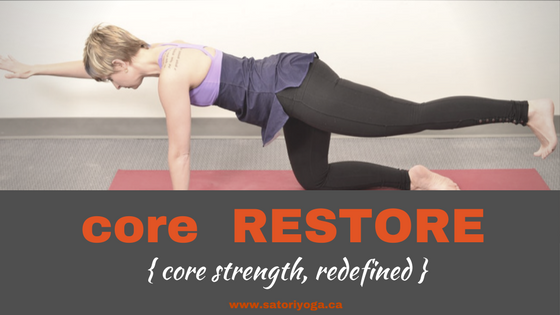
This Spring's Wednesday Core Restore class overflowed faster than you can say "SPRING", so after some soul searching (and schedule re-arranging) I've added Spring 2018 Beginner Core Restore #2.
Now, the wait-listed folk already have been taking advantage of this offer - which means there are only 4 spots left in this
newly added class.
Is better hip function (so you can greet spring - whenever it arrives! - with a spring in your step!) and more torso stability on your wish list this spring?
Now, as promised, CORE RESTORE - lesson #5.
So far, we've talked (mostly I talked!) about several factors contributing to our stability. None of them is as important as our breath.
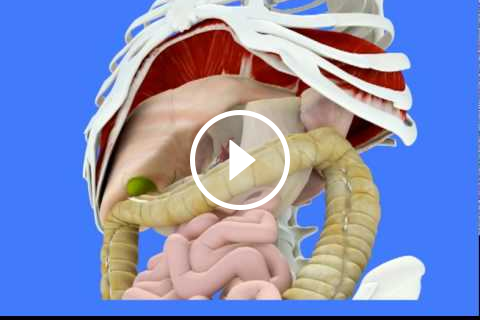
Watch the video to get the visual of full - body breath movement:
3 important heads up for this video:
1. 'tis in French, but the visuals are excellent, so don't be worried about the language barrier.
2. We do not need to full - body breathe all of the time, but we do need to have an ability to recruit our breathing system to respond to the demands of the situation. If your breathing is stuck in one mode all of the time, both the nervous and the muscular systems re-pattern themselves and limit your ability to breathe fully.
3. Back ribs do not seem to move in this
video, yet in really full body breathing, back ribs also do expand.
So why breathing optimally is so important for stability?
One word: pressure.
The intra-abdominal
pressure is what stabilizes our spine when we stand, walk, and move about.
Whenever the ribs shift out of neutral position {check e-lessons # 3 + 4 for why that could happen} - for example, move forward and lift in front, they also drop in the back, which, in turn, pinches the back of our "abdominal balloon."
That places the content of abdominal balloon under more
pressure, and, like most things under great pressure (you know this first hand!), it tries to escape.
This escaping pressure moves either up (potentially creating hiatal hernia and increasing pressure on abdominal aorta), downward ( leading to pelvic floor disorders), or forward to destabilize our structure even further.
It is right next to impossible to utilize the muscles of the abdomen
correctly if your alignment or breathing (now you know how the two are connected!) are sub-optimal.
What about breathing and hip mobility then?
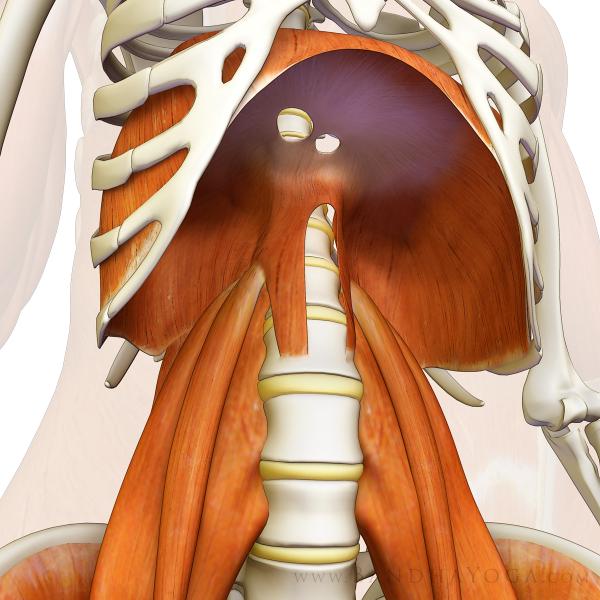
We talked about the "legs" of the diaphragm - so called "crura" - that connect the diaphragm to the spine, and also to the hip flexor group.
Tension in the breath (and especially sucking the belly in) affects our hip mobility because of this intrinsic connection { check the handy image -
the long muscles on both sides of the spine are those of the hip flexor group, while the parachute - looking one is the diaphragm}.
Furthermore, because this "crossover" is so very central in the body, it has the potential to influence a lot of things above (heart, lungs, shoulders, neck) and below the deck (digestion, elimination, hips, knees, feet) through the infrastructure of the connective
tissue.
Folk, I don't say this lightly - having suffered the effects of this "crossover syndrome," - my guinea pig of a body have confirmed that adhesion (which is what I had) in this area can create shoulder pain, heart palpitations, hip tension, knee and even foot pain.
Tracing the chains of connective tissue have
helped me to solve "my left side sucks" mystery and move forward with my life. I wish the same for you!
CORE RESTORE - beginner:
Tuesdays, April 10 - May 15
6:00 PM - 7:30
PM |
|
|