This week my intention was to touch on "front to back situation," as in "what is the relationship between the front and the back of my body, and more specifically, between the muscles at the front and the back of my hip joint?"
Turns out many of you had many questions about the mechanics of breath - so we've spent the majority of our check-in time chatting about that. I hope that conversation cleared up some of the confusion, but if not, you can review last week's material {Breath. Pressure. Stability}
right here.
Nonetheless, let's stay the course and discuss what we ought to - relationship between the muscles at the front and the back of the hip joint.
Let's start with a review what we have covered thus far:
~ we need active stabilization in every step of the walk – when we transfer weight from one foot to the other
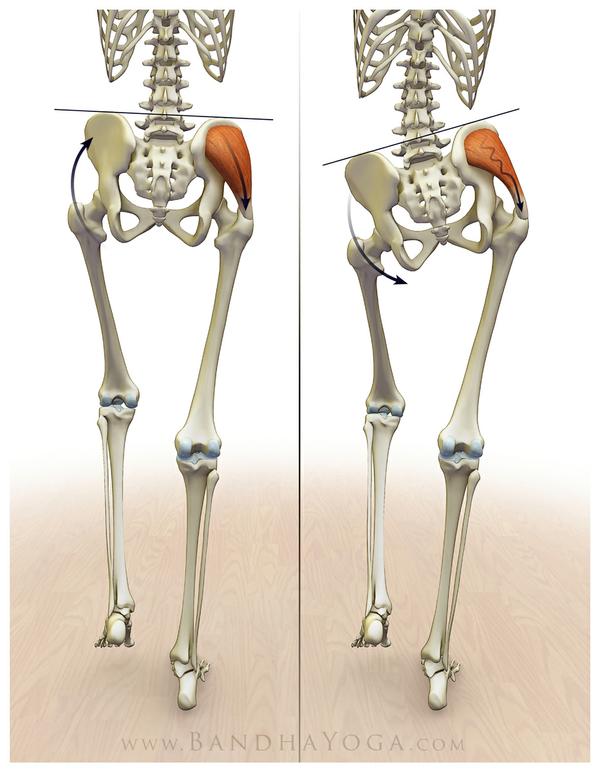
~ gluts are the primary hip stabilizers; if they are sleepy / inhibited (as in when we spend a lot of time sitting on them!) – we will most likely overuse other hip / leg / abdominal muscles for stability, thus compromising hip and knee health and alignment.
~ healthy+vibrant gluts support correct pelvic alignment and
appropriate length of the pelvic floor muscles, especially at the back of the pelvic floor. Tight gluts can and often will contribute to tight back of the pelvic floor (vice versa is also true!).
~ in order for us to stabilize well, we need to know how to engage and also release / relax the glut. We spend a fair bit of time talking about hip flexion and mastering glut release in hip flexion; moving
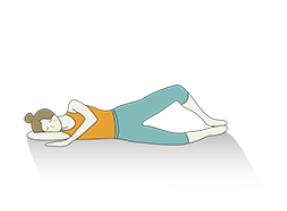
forward we need to focus on finding + activating the gluts (that's where the Clam Shell and the Mean Green Band you've yet to meet next week come in handy).
~ when the gluts aren't doing their job someone else has to - one common strategy is to grip abdominal muscles or hold the breath to execute the movement. Another is to find readily available helpers - quads, inner thigh
muscles, and the hip flexor group are the usual suspects.
and most importantly
~ gluts work as a reciprocal pair to the hip flexor group: part of their job is to pry tight hip flexors open.
So when the gluts aren't active / strong / resilient:
Sleepy gluts can lead to tight hip flexors.
Tight hip
flexors can lead to no hip extension when walking.
No hip extension when walking can lead to unhealthy changes in gait (shortened gait, shuffling, hip swiveling or shimmying, upper body twisting to name just a few) that can potentially lead to hip, knee, and spine damage.
All of that shimmying, shuffling and twisting leads to sensation of imbalance + instability through the torso -
which we tend to correct by tightening any muscle we can find.