Today's topic follows the many, MANY in-class conversations we've had in regards to nervous system. As it usually tends to happen, this topic was ripe and ready for writing the moment I've heard myself unpacking it for the 7th time.
The reason the nervous system stuff is so important is this:
our nervous system plays the KEY role not only in how we experience the world, but also in how we experience our body - and whether or not our body experience includes chronic pain.
Human nervous system is made up of central nervous system (that's the brain and spinal cord) and peripheral nervous system - that's the stuff of the rest of the body.
Today's bite-size talk is about peripheral nervous system - seems it is much easier to understand (and address!) its role
in pain production. Things get more complicated once we get to between the ears stuff.
Let's start with the most important bit: there are no specific "pain nerves." Each and every body sensation we have - things like touch, taste, temperature changes, location of our body in space, our relationship to gravity, and yes, pain - are all relayed through the same peripheral nervous system network.
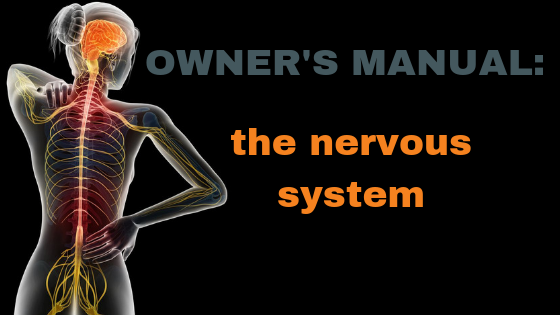
I chose the header image for a reason: it demonstrates - not in a perfect detail of course - the concept of peripheral nervous system.
Imagine a multitude of thick and thin tubes reaching from your spinal cord outward in
all directions, to every part of your skin, and all the way to the fingers and toes. Peripheral nerve network is vast!
Thick and thin tubes of our nerves are enmeshed and interlaced with our connective tissue, the fascia (more on fascia next week!) In a sense, our connective tissue network serves as a scaffolding onto which the lace of our peripheral nerves is
threaded.
Nerve tissue is not only very sensitive, it is also nutrient-demanding.
The nerves just plain don't like to go hungry!
Tight and restricted connective tissue creates a "dam effect" around the nerves: the nutrient rich body fluids cannot reach the nerve tissue, and the cellular wastes cannot be eliminated. Connective tissue
tension can also trap the nerve fibers preventing them from sliding freely through the tissues.
Some of you know that nerves don't particularly like that situation either.
This is one of the reasons why we spend a significant portion of each and every class on ball-rolling and myofascial self-release. The rolling and kneading action of the balls frees connective tissue,
and allow us to find better joint positions and movement patterns.
More importantly, ball-rolling talks - directly and specifically - to the peripheral nervous system. It is that conversation that lessens the pain.
More next week!