Good morning to you wonderful people, Happy spring, and welcome to March edition of Satori e-news. The
sun is shining, the sky is blue, and even though the temperatures are still below freezing, we are officially over winter's end rut. Geese should be here soon. So excited! According to Ayurvedic year cycle, spring is Kapha time of year. The unfortunate downside of Kapha time is the late winter heaviness that lingers (as does the snow), making it hard to get up and go. Sinus infections and allergies are the hallmark of the
season, along with muddy state of mind (read more about Muddy State Of Being in my latest blog post - I have included a cool experiment for you to play with). Even more annoying is that healthy gains we work so hard to implement don't last very long - we get caught in exercise-overuse-injury cycle, and paleo diet sooner or later brings on the carb binge. As promised
in "Think Spring" e-note, this edition of Satori news is all about leaning into spring changes the easy way - like sprouts do, and creating healthy lifestyle that sticks around - at least for the summer! I've learned from my clients that even though attacking changes head on can deliver fast results, this approach works only for a small number of people, and only a small percentage of time. It also brings on first-rate body-wide resistance -
fatigue, insomnia, injuries, crabby moods, and snarliness. To create sustainable improvements it helps to play a bit like James Bond, and sneak healthful changes right under our mental radar unnoticed. Common good advice #1: GET MOVING. The usual scenario: You get excited about exercise. You decide that you are going
to exercise X number of minutes X times a week. And then one of the following happens: you can't find time in your schedule to exercise consistently; you don't have the energy to do it; you get burnt out or bored; you get injured.
Satori less-common twist #1:
BE HONEST. BE REALISTIC. SLOW
RIGHT DOWN!
BE HONEST. BE REALISTIC. Changes can be stressful, and stress drains our energy. Take an honest look at your schedule and decide what you can realistically commit to on an everyday basis (yup, everyday - I usually start my clients with 5 to 10 minutes every day) without adding extra stress to your life. Ignore commonplace suggestions of 30 minutes 4 times a week - these suggestions are made for imaginary people with non-existent lives.
In fact, ignore anything you are being told about exercise. LISTEN TO YOUR BODY instead.
SLOW RIGHT DOWN. Understand that any type of activity (and especially repetitive motion activity - golf swing, swimming, biking,
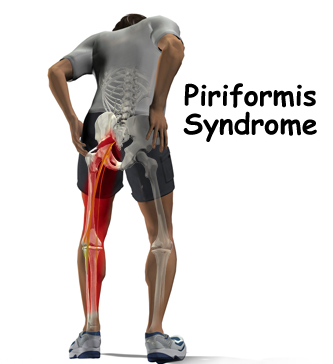
even walking. Biking, for example, can trigger a sciatica-like pain called piriformis syndrome, especially if your sitting position is not stellar) places higher demand on your body - not only in terms of cardio-vascular ability, but also joint function, and core and muscle strength. All of these take time to develop. If your movement patterns are less than optimal, you are repeating an unhealthy motion over and over again - this wears out joint cartilage, leads to muscular imbalance and
chronic inflammation. Injuries quite often occur at the site of chronic muscular tension or imbalance - moving more puts you at a higher risk of developing a repetitive motion or even acute injury. Spend some time developing breath awareness, body awareness, and refining your movement patterns prior to embarking on your exercise program, and continue to do so as you increase your exercise load.
Curiously, students that stick to this slow approach find that their athletic performance improves dramatically, and in a short period of time, even though they don't push their bodies to the limit. Satori offers several excellent programs - one-on-one work, yoga classes (there's new Yin class starting in April), and master classes with in-depth look on season-current topics (this spring's selection
includes a close look at our foundation - feet and core) - to help you increase body awareness, improve movement patterns, and learn how to take care of your moving parts pre- and post-exercise to prevent injuries. Common good advice #2: CHANGE YOUR DIET. The usual scenario: You get excited about healthier eating. 3 weeks into it you start craving sugar and coffee. If you got on the exercise bandwagon at the same time you changed your diet, you most likely are feeling hungry and tired by now. It feels like life is passing you by as your besties get together for a glass of wine while
you are sipping on diluted cranberry juice. Worst yet there are so many diet plans out there, you can't decide which one is the right one, and which one is right for you. Too much information leads to erratic dietary changes that produce no results. OR, diet that is not appropriate for your constitution or situation results in weakness, dissatisfaction and cravings. Yuck, right? Satori less-common twist #2:
UNDERSTAND YOUR DIET END-GOAL. PAY ATTENTION. DE-CLUTTER
FIRST. UNDERSTAND YOUR DIET END-GOAL: If you just want to drop 20 pounds to fit into that bikini for your up-coming trip to Bahamas, and couldn't care less about whether healthy eating
sticks around post-trip, than slow & sustainable change plan is clearly not for you. Paleo diet, even though not sustainable long-term (neither personally, nor environmentally), tends to produce fast results with least amount of damage - check it out. If, however, you are after healthy way of eating for life (I know, long term commitments freak me out, too), then some house cleaning is in order.
Let's just PAUSE FOR A MOMENT: I am not about to tell you what to eat and
what not to eat - there are tons of people out there who are doing that already. Food stuffs go beyond personal choices and circumstances - what and how we eat is wrapped in memories of grandma's Sunday dinners, smell of fresh cinnamon buns, our emotional states, stress and hormone levels, and our attitudes toward our bodies. Even a small change in the diet can run into some heavy-duty resistance - sometimes from you, and often from your family. So instead,
I invite you to take stock of your believes and thinking patterns - that's where PAYING ATTENTION comes into play. PAY ATTENTION: there can be many, many, many focal points when we start
becoming mindful about our diet. When working with private clients, we take even a wider-lens approach to understand how our general thinking habits affect our relationship with food. I like this approach for two reasons: firstly, it makes full use of Ayurvedic concept of interrelatedness; secondly, it gives us several entrance points to choose from. (It also creates an awesome foundation for mindful living.) DE-CLUTTER FIRST: this principle applies to mental, physical and environmental (your closets, junk drawers, and the like) level. To start, take a radical inventory of your thoughts,
beliefs and actions about consumption. Do you believe that bigger or more is better? Do you engage in over - consumption of information - how many hours do you spend daily on Facebook or in front of TV? How often do you check your phone? How cluttered is your house? Do you often buy because you want something, not because you need something? I am not saying, "Don't buy this cute springy-pink top, or the newest version of iphone (what is it, by the way?)." I am inviting
you to look at your thinking habits, and, in this case, consumption habits, so you can begin to understand how those 10 pounds you so want to lose are as much wrapped in your beliefs, as they are in foods you eat. Your body is eavesdropping on every thought, and takes stock of every action - is it any wonder that weight-related disorders are so prevalent in our instant gratification obsessed and consumption-driven society? My students often say, " You ask the hardest questions!" As I watch them dig deep into the murky pits of their subconscious, I am reminded of autumn leaves, that decompose silently under the
blanket of snow to provide fertile soil that nurtures spring's new beginnings.
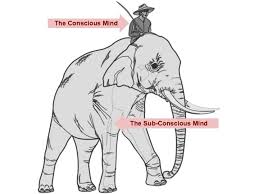
In math terms, our health is a total sum of our thoughts, habits, mental attitudes, and values, many of which exist below our conscious level of awareness. Slow-ga is really good at unearthing our subconscious believes that run our lives. Some of us start pushing into those obstacles early in our health journey, and fall off the mat. Others
take a little longer. Yet, sooner, or later, we all are staring in the face of some old habit that's holding us back (oh, and how crafty they are - the excuse stories these old habits come with are so real and believable!) This slow-ga way gives the sprouts of our new-found healthy habits time to root, get established, and make themselves at home. Once they do, we can bravely stare that old habit monster right in the face, root through our toes, dig our heels in, stand up toll,
breathe deep, and say calmly," I know who you are. I am not afraid of you. I know what to do," and keep on going. See you on the mat - and keep on yoga-ing! P.S.This newsletter
turned out not to be less about food and exercise, and more about thinking for long - term success - as you can tell, I don't believe in quick fixes. One more thing worth mentioning: our society confuses thinness and activeness with health. Are you healthy if you eat a ton of veggies and exercise every day, but can't sleep at night, can't focus, and have an irritable bowel (this, by the way, is a real-life client of mine)? You can be thin, and not healthy. You can also be active, and not
healthy. Use slow-ga approach described above as a general blueprint to uncover and discover the best shiny version of yourself. And, as per usual, should you have any comments, questions or thoughts you'd like to share, or need a little extra TLC drop me a line. |
|
|