January e-HUG: Nourish New Beginnings

Published: Sun, 01/04/15

Satori e-news: Nourish New Beginnings
E-mail not looking beautiful? Click here for pretty on-line version

Nourish beginnings, let us nourish beginnings.
                                                                                                                                ~Muriel Rukeyser
Happy New Year, and welcome to the first 2015 edition of Satori e-news.

What does the year 2015 have in stock for you? How is this year going to be different from any other year?
What will you learn, achieve, accomplish? Which parts of your life need a detox or a tune up?

Many of us look at the beginning of each year as a blank slate, an empty page to write down our innermost dreams and desires. Over 80% of Canadians engage in a ritual New Year goal setting. Merely a fraction succeeds in achieving those goals; most of us fail year after year.
Neuro - what now?
What makes so many of us fail?

Is it the lack of resolve? Unskillful goal setting? Absence of measurable outcome? Cantankerous attitude?
I wish there was a straightforward answer... Each one of us is unique, and the solution to the resolution dilemma is as complex as humankind itself.

About 10 years ago I was introduced to the Belief Re-patterning method. Truth be told, even though I felt drawn to the alternative healing ideas, this "woo - woo" stuff made me very skeptical at first. Having grown up in a family of engineers and had gone to university to study petrophysics, I trusted science. The re-patterning practice of saying a statement and taking several deep breaths afterwards made no sense to my scientifically trained mind. How could this work?! Yet, there was no denying it - whether it made sense or not - I felt different afterwards.
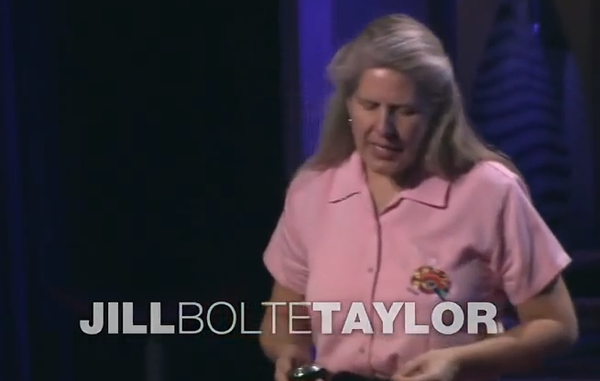
Today, several courses later and thanks to the groundbreaking work of Jill Bolte Tailor (watch Jill's recount of her "stroke of insight") and Dr. Norman Doidge, I see Belief Re-patterning practice as one of the first (if overly simplified) attempts to harness the power of neuroplasticity.
For a long time scientists believed that the human brain is immutable. Now we know that changes in the brain are not only possible, but they are happening all of the time. A fascinating new field of neuroscience called neuroplasticity have proven that the human nervous system is an incredibly dynamic mechanism, capable of change and adaptation. Neuroplasticity, the new darling of the forward thinking medical community, is the study of brain's amazing ability to reorganize itself and the pitfalls of the process.
Wait! Pitfalls? What pitfalls?

You probably know how easy it is to reject an opinion that is very different from your own: for most of us it happens almost automatically, in a matter of a split second. Our nervous system operates on exactly the same principle: even though the brain is exceptionally adaptable, it will reject (and sometimes even overcompensate for) changes if they are made at a way too fast of a pace. From the nervous system stand point any change in our thinking or doing needs to be gradual and non-threatening. That's the reason I ask students to register for a session - we carefully scaffold changes over a period of several weeks to avoid "neural lash-back." This graduated approach is important for any student of yoga; it is absolutely essential for anyone coming to yoga after a period of inactivity or to manage a persistent health condition. I wonder if a way-too-fast change and neural lash-back that follows can be one of the reasons behind the failed resolutions. What do you think?

In last months' newsletter I talked about life’s challenges, and how we can, with the understanding of neuroplasticity, turn those challenges into opportunities to confront the all too familiar patterns of thinking and being.  The following “Choosing Differently” series is an invitation to delve deeper into the nitty-gritty of the process. You’ll meet two of my students, and witness their A-HA yoga moments and life’s little victories, as we explore fresh approaches to solving annoying/ life-disruptive issues.
 
Choosing Differently, Part 1: The Fine Art Of Propping

Meet our first “choosing differently” hero – we’ll call her Anna*.

Anna is a very active young teacher – she runs, bikes, skies, snowboards, plays soccer, and practices yoga. She also lives with persistent back pain. Over the past 3 years we worked through some postural and movement imbalances; I also referred Anna to a great physiotherapist. All of those interventions helped some: Anna has gained a lot of body awareness; however, the pain is still there.
Anna’s usual approach is to grit her teeth and power through. She prides herself on being active and busy, and avoids idle time by all means possible.
Anna comes to Yin & Yang class on a weekly basis. She loves the active flow of yang practice; it is the longer-held stretches of yin yoga that she finds testing. She struggles to hold still, her body constantly shifting to relieve a pressure point here or there, and mental focus zooming from back pain, to wrist discomfort, to that knot between her shoulder blades, to what the other students in the room are doing.

During the private session we looked at some poses that Anna found particularly tricky. In the group class Anna tries hard to block her body’s complaints out of her mind. Breathing forcefully is the usual go-to strategy: drowning discomfort in the breath seems like one of the very few options available. Instead, I invite Anna to listen.

“What do you feel in your body?” I ask.

Responding to her body’s needs, we shorten the stance in the deep lunge pose; extra padding under the back knee eases (not forces!) hip flexors into a stretch; blocks under the hands soothe the wrists; supporting the head allows mid-back to relax.

And then the magic happens: Anna’s breath smoothes out; her body suddenly looks quiet; there is a sense of tranquility reminiscent of still point in cranial-sacral work. These are poignant moments. Every once in a while I get the privilege to witness a moment such as this: stillness so profound, it is as though the whole room is imbued with the luminous quietness of human being.  

“How does this feel?” I inquire after some time.
“ Peaceful…” Anna replies.

Our game plan for the future – yoga mat first, “real life”** second:

~In the yoga pose listen to your body: avoid pushing discomfort out of the way or trying to overpower it with the breath. Just listen.
~Make adjustments and use props to ease your body into a pose. Slow down. Ask questions.
~Monitor your mind’s reactions to changes you are making in the posture, and also to the fact that your posture looks different than the rest of the class.

DIY Exploration:

Can you think how you can use these strategies in your yoga practice? What about “real life”?
Choosing Differently, Part 2: What Are You Listening To?

Earlier in this newsletter we started a conversation about the neuroscience behind our choices – the easy ones, the familiar ones, the unconscious ones, and the difficult ones. You’ve met Anna, our “choosing differently” hero, and witnessed a transformation in the way she approached her yoga practice. Before we’ve met for a private class, Anna’s usual strategy was to block her body’s complaints out of her mind. Breathing forcefully was her go-to tactic: drowning discomfort in the breath seemed like one of the very few options available. With an invitation to listen to her body (and pay attention to what it has to say!), and a few adaptations to the poses, Anna’s practice softened, and her mind became more peaceful. I then asked you, the reader, to explore the ways in which you can apply “listening and hearing your body” on and off the mat.

How did that go?

This installment in the Choosing Differently series is an invitation to dive deeper into the “body listening,” and ask yourself “What am I listening to?”

Say hello to Katherine*, our second “Choosing Differently” ambassador. Like many of us, Katherine strives to be more active - she walks and bikes during the summer months, and snowshoes in the winter. She finds that her activity level is governed by the way her body feels on a particular day. Katherine lives with fibromyalgia, degenerative disk disease, arthritic changes in her feet and knees, and, to top in all up, an annoying heartburny digestive condition. Her sleep patterns are erratic; there are nights when she doesn’t get much sleep at all. Seasonal depression and anxiety are no strangers to Katherine, and are worsened by periods of heavy stress load. ***

We start our private session with an inquiry into thoughts and emotions – the lens which frames Katherine’s experiences on and off the mat. Once on the mat, I closely observe Katherine’s alignment and the flow of her breath.  I ask Katherine to describe sensations that are arising with movement and the during longer held poses.  Our conversation goes something like this…
Me: “ Can you describe what you are noticing?”
Katherine: “Yes, my left hip feels completely stuck. It can’t catch up to the right!”
Me: ”What are the sensations in your right hip?”
Katherine: “ Right hip moves fine. It is the left one that’s giving me grief.” This statement is followed by the lengthy description of “grief particulars.”
Katherine’s account of her mat experience is an indication to alter the original session plan: instead of further pursuing hip mobility, I guide Katherine through one of “Pain Care Yoga” principals.

Shifting the focus is an important part of Pain Care Yoga. You see, most of us intuitively understand that positive frame of reference is good for our well-being.  Yet persistent pain, just like a canker sore, demands our constant attention. In Pain Care Yoga we use specific exercises to divert attention to a more positive experience, thus gradually resetting sensitivity baseline of the nervous system. Learn more by joining a class!

Back to our private session: eventually we return to in-bodied sensations. I encourage Katherine to focus on her “good” side.
I might as well have turned all studio lights full on and hung a disco ball from the ceiling, for Katherine’s face suddenly lights up. I know she’s got it, but ask anyway: “ What are you noticing?” “ I always listen to my grumpy side,” Katherine answers “ and focus on what feels wrong. You just taught me to listen to what feels good.”

DIY Exploration:

Today’s second invitation is to refine the way you listen to your body, and explore the feedback loop that is created by your point of focus:

What body sensations do you usually pay attention to?
How does that particular point of focus alter your thoughts, mood, and attitude?
To close the feedback loop, how do your thoughts and mood affect the way you feel in your body?


* Students’ names are changed for privacy. I also ask the students to OK the writing before it is published.
**There’s a saying in the yoga world, and it goes something like this: “ Mat is the microcosm of your life: what you do on the mat and off the mat are inseparable.” I’ll let you be the judge of that.
***I do not attempt to either diagnose or “label and file” Katherine’s symptoms. What your read here is a mere recount of what she has heard from multiple medical specialists over the years.

Have you tried any of the DIY explorations? What did you find out? Let's start the dialog that nourishes the seeds of this year's big dreams and healthy resolutions - get in touch with me over e-mail or Facebook; and, of course, questions, comments, and conversations are always welcome before, during and after any class.


Julia's January Reading List:

This list is much, much shorter than its December counterpart due only to the fact that I spent most of the Christmas break watching movies. I'll include my fave movie picks here!

Books and Articles:

"The Homeward Wolf" by Kevin Van Tighem

"The High Cost of Oil" by Ted Genoways, Outside magazine, December 2014. ( I have this edition if you'd like to borrow it.)


Alive magazine, January 2015 edition, has some excellent goal-achieving suggestions. Pick up a copy at your friendly neighborhood health-food store.

Movies and Documentaries:

"Shining Mountains" a four-part documentary about the past, present and future of the Rocky Mountains  (available on Youtube).
"Damnation" How do dams affect the rivers, salmon runs and native peoples?
"The Good Lie" a simultaneously heart-breaking and heart- warming story of the "lost boys" - child refugees of the Sudanese civil war.


And the parting quote:

"Sentiment without the action is the ruin of the soul."

~ Edward Abbey

See you on the mat!