Good day! Welcome to February edition of Satori e-news.
Lately, I’ve been writing a lot about pain. My primary focus has been the nervous system and its role in creating pain experience, and also neuroplasticity – the
science of hope. I might have alluded to a complex nature of pain, especially persistent pain, but have yet to stop and investigate all the complicated details.
How does our way of life contribute to persistent pain? It has been a few years since I’ve graduated from the Chopra Center Ayurvedic practitioner program. Even though I no longer teach Perfect Health curriculum on a regular basis, Ayurvedic lifestyle principles are with me every day and every step of the way. Whether I
discuss dietary changes with a private client, plan for a
class, or busy sorting out my own mental hurricane, 5,000 year-old wisdom of Ayurveda lands its comforting touch and reassurance.
Let us to start from the
ground up and examine ecology of pain through the lens of our lifestyle choices. Ayurveda, with its holistic nature and teachings of intimacy with one’s surroundings, offers a perfect container for pain ecology inquiry. Over the next several weeks you and I will journey into the world of Ayurveda to discover 5 great elements, or Mahabhutas, and learn to use simple elemental practices that cultivate balance and foster healing.
I intend to set a rather unhurried pace to our exploration, and
visit just one element each month. Why so slow, you might ask? Well, this is a case of "hurry up and slow down." I refuse to contribute to information overload - undigested information, just like undigested food or emotions - can lead to toxic overload. Since we are talking about Space, we might as well become conscious (and Spacious) about the way we consume information. This "slow waaaay down" decision also comes from several years of teaching Ayurvedic
workshops and watching my students struggle with the "hurry up and move along already" approach.
Imagine two maps laid out in front of you. The first map is a record of your lifestyle choices: simple things such as the time you wake up, how brightly your house is lit in the evenings, your beliefs about activity and rest, and even how late you usually have supper are noted
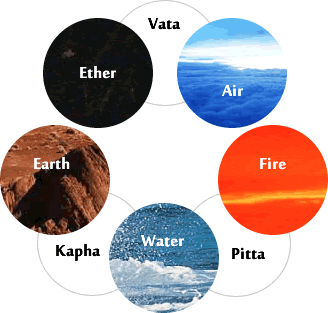
here. The second map is an Ayurvedic one – it is a diagram of basic elements that hold the key to a more intimate understanding of your essential nature. Juxtaposing the two maps charts a course to healing through a deeper knowing of what nourishes and what depletes you.
Modern science views the world through a lens of progressively smaller building blocks – cells, molecules, atoms, and, more recently, quantum particles. This approach, while advantageous in many ways, can promote the
attitude of fractionalism and disintegration. In western medicine, psychologists treat the mind, chiropractors look after the spine, cardiologists monitor the heart, while neurologists take care of the nervous system. Yet anyone who has lived and dealt with a chronic condition knows that dysfunction often exists at the crossroads of body and mind, and within the junction points of different body systems. Probe a step further: the current pace of technological development coupled with this spirit
of disconnect has created a belief that we, humans, are separate from nature. We assume that we can alter our surroundings in any way we please without directly affecting our finely tuned body – systems.
Quite like modern science, Ayurveda looks at the world through the window of its building blocks - the 5 primordial elements: Space (sometimes also called Ether) , Air, Fire, Water, and
Earth. Quite unlike modern science, Ayurveda delights itself in observing and, sometimes, correcting the delicate interplay that exists between these elements in our inner and outer environment. Ayurveda is a perfect tool of self inquiry: it fosters a deeper inner listening, so we can reduce our reliance on advice of the “experts” – medical professionals, naturopaths, chiropractors, and yes, even your yoga teacher, – and depend more on an intrinsic sense of what is right and what is
wrong for (and in) our body. Perhaps the state of inner listening is where we ought to start. Let’s do the element inquiry before we delve into the world of Ayurvedic definitions and before I start dispensing my own opinions on the matter – this way your initial introduction to the elements’ worldview is not clouded by someone’s (even experts’!) words. Here is the first DIY inquiry of the Pain Ecology series - DIY experiment #1: ~ Spend about 5 minutes (1 minute per element) to reflect on how space, air, fire, water and earth are represented inside and outside of your body. There are no right or wrong answers here, so feel free to play with whatever comes into your imagination. In the following weeks we will explore each element in more detail, and introduce some basic elemental practices into the flow of our days. Here is a
segue to the next segment: I often suggest Viparita Karani, or Legs Up The Wall pose, to clients who are undergoing periods of intense stress, dealing with sleepless nights or experiencing hormonal imbalances. Can you guess the most common response to this suggestion? In the previous section I invited you to spend 5 minutes noticing how the 5 primordial elements – Space, Air, Fire,
Water and Earth – are represented in your inner and outer environment. Were you able to find 5 minutes in your schedule? Some days I feel like I can’t afford to spare even a minute of my time… The bedrock of Ayurveda is identifying and balancing one’s unique individual constitution (also called “dosha”) through diet and lifestyle. Seems simple enough, yet many students of Ayurveda struggle to grasp the intricate tapestry of doshic typing. Common-sense elegance
of the Ayurvedic system is lost unless you fully understand how the 5 primordial elements – Space, Air, Fire, Water and Earth – combine to create individual body-mind constitutions, or doshas. Today we will embark on in-depth exploration of these 5 elements, starting with the element “Space.” “Space”can be a tricky
concept to grasp, quite possibly because we are not consciously aware of the “Space” in our environment (unless, of course, someone invades our “personal space.”) What associations come to your mind when I mention this element?
Yogis of the past didn’t have the powerful tools of now day to see that deep down at subatomic level the body (and everything else for that matter) is over 98% Space. They explained this element in simpler, easier to understand terms. In ancient texts, Space is
the vast expanse of cosmos, spaciousness of the mountaintops, open air of the plains, freedom of the open road. Inside the body Space is in intercellular openings, within the hollow tubes of blood vessels, inside the plumbing of the digestive and urinary tract, in the breathing sacks of lung alveoli, and even in a fraction-of-a-second pause between the thoughts. We are mostly (or completely) unaware of these inner spaces, unless, of course, they are plugged up… There’s nothing more
annoying than a bout of constipation (especially when you are on the road!), or scarier than a sudden asthma attack. Anxiety can feel debilitating, stuffed-up sinuses and ear infections are certainly no fun, and passing a kidney stone hurts like there’s no tomorrow. We all know what happens when fatty plague blocks the inner space of blood vessels, or when rogue mutated cells invade intercellular Spaces… Western medicine will most likely view and treat these as completely separate events. A
holistic practitioner, trained to see the whole person, will notice a common thread that connects these imbalances to a larger picture of one's lifestyle.
Let’s zoom out just a bit
Here is a question I asked earlier: “I often suggest Viparita Karani, or Legs Up The Wall pose, to clients who are undergoing periods of intense stress, dealing with sleepless nights, or experiencing hormonal imbalances. Can you guess the most common response to this suggestion?” You were correct if you guessed the
lack of Space as a reason my clients don’t practice this pose at home. What I most often hear is “ I don’t have any wall Space to put my legs up.” Imagine the process of zooming out as putting more Space between yourself and the subject of investigation… Once you are aware of this element, you begin to see it as a container that holds space for all other elements and the flow of their interactions.
DIY experiment # 2: Learning To Zoom Out ~ Pick an object to work with (this could be absolutely anything in your environment). Start your experiment by focusing on this object.
Now shift your attention to focus on the Space between yourself and the object.Were you able to detect the subtle differences between the two points of your focus?
Let’s make it more interesting, shall we? This second exploration provides a perfect segue to the next section and our topic of interest: how do our lifestyle choices contribute to pain culture?
DIY experiment #3: Zooming Out Mindfully This, essentially, is the same experiment, but practiced in a very different way.
~ Focus on the object of your choosing; observe the quality of your gaze (does it feel hard or soft, tense or relaxed?) and the quality of your breath (does it feel spacious or restricted; more in the chest or in the belly?)
Now shift your attention to focus on the Space between yourself and your object, and again, observe the
quality of your gaze and your breath.
What did you discover?
Now might be a good take a break from reading (use the guided mediation practice below) and give your body-mind some Space to process the information. You already
have enough skills to begin the unraveling process: use DIY #2 principles to zoom out a little bit and bring stressful life events (practice on smaller stresses first!) into a softer, more spacious focus. Watch what happens; practice being gentle (non-judgmental) with yourself. Give yourself a lot of Space to make mistakes and try again – after all, you are learning a new concept and a new skill!
DIY experiment #4: A Meditation
On The Pause Between The Breaths ~ Find a comfortable seat. Don’t underestimate the importance of this step: your body is a container (a Space!) for your meditation practice; the way you position and shape it can make or break your mediation experience. Join
a meditation class to learn how appropriate seated posture can encourage introspection and deepen your mediation. (Next Meditation Prescription class is on February 11 at 7:45 PM). With your eyes closed, bring your breath into a soft focus.
Bring your attention to the sensations of breath at the tip of your nose.
Now shift your focus to notice the barely perceptible pause between the inhale and the exhale. Avoid the temptation to change this pause in any way – it is perfect
exactly as it is.
Practice for as long as it feels comfortable (or for however much Space you have in your schedule.) Enjoy! Congestion... In The Outer
Space
A couple of weeks ago we road-tripped to Powder King. Hard to believe that in all of my years of living in GP I never found time to travel that way. What a hauntingly beautiful, Spacious and wild place that is!
In a true
winter wonderland style, big snowflakes softly floated down, piling onto our toques and decorating jackets in elaborate patterns of stars and flowers. Time slowed down to a halt; everything and everyone seemed to move with poignant grace, as if choreographed by an invisible “el maestro."
As the chairlift climbed this serene picture gave way to a distinctly different one. Underneath the power lines, where most of the trees were cut, the wind beat wildly against pulled up hoods and drove sharp
snow needles into our cheeks. Friendly chairlift chatter was no more: each one of us was trying to sink a little further into the jacket to preserve what little body heat we had left.
Chairlift temperature gradient is, of course, part of the downhill skiing lore. So why bother writing about it? Why should YOU care? And what does it have to do with our “Space exploration?”
This section marks the conclusion of the “Space Odyssey” – an Ayurveda-based exploration into the roomy nature of
Space element. So far, we’ve familiarized ourselves with Ayurveda and its worldview, learned about 5 great elements (Space, Air, Fire, Water, Earth), focused on the way Space element is expressed within and without our bodies, and done a few simple DIY exercises to get more in touch with the Space element. Any questions so far? Let's take a look at the way container of Space express itself in our living quarters, in the way we structure our days, in the habits of our minds, and in the shape we hold our bodies? We’ll take only a brief look at some of these questions, while closely examining the others.
Space is a curious
entity.
Our Western culture often perceives Space as emptiness, a vacancy that is hard to deal with. Our actions, of course, correspond with that belief: we cram our houses with stuff and our schedules with “to do” things. Do you recall Legs-Up-The Wall example? We accumulate (wealth, possessions, body weight) as if to insulate ourselves from life’s imminent curve balls…
Ayurveda teaches that congestion in our outer Space (also called the Extended
Body) inevitably expresses itself in our inner Space. Rapid shallow breathing and incessant thought chatter, two most common experiences of the newly minted yoga and meditation students, are a direct representation of that inner congestion. Not surprisingly, landing on a yoga mat and spending just a few minutes witnessing the breath – in essence, changing our relationship with Space element – makes a noticeable difference. How does that relate to persistent pain? Actually, in a
very simple way: pain contributes to and is perpetuated by shallow breathing and a habitual thought chatter. Disrupting this “pain – shallow breath – habitual thinking – even more pain” vicious cycle can lead to reduction in pain and a more positive outlook.
Speaking about habitual thought chatter (might as well while we’re at it!): quite often, detrimental beliefs hide deep
beneath the surface of our conscious mind. Here is a DIY exploration #5 that can help to unearth one of those injurious thought patterns: Study after study shows that healthiest people on the planet value rest just as much as they value activity. In other words, empty spaces on the schedule are as important to them as the occupied ones. How about you?
Recall your last weekend: was it a more productive or a more restful one (do
you prefer one to the other)? Or, perhaps, you were able to strike a fine balance between the yin and the yang of your weekend? Me personally? I know that in 90 seconds (quick warm-up cycle of the microwave) I can load or unload top shelf of the dishwasher. Scheduling restful empties on my calendar continues to be a daily challenge, partially because of my Ayurvedic body-mind type (more on that in March e-hug), partially due to an extensive “get busy - no idling!” conditioning, and, to
some degree, because of the die-hard habits of a single mother. Learning to recognize the early warning signs if an impeding burn-out and inevitable illness that follows - kinda like finding the edge in yoga practice - has been one of the most valuable lessons of my yoga teaching career. Creating support systems to correct the unraveling tailspin has been the other. Want to know how I do it? Book a private appointment to benefit from over 20 years of my experience.
Shifting gears now, let’s return to the Powder King chairlift story and reflect on the link between our inner and outer landscapes. Now you know that I’ve used the temperature gradient example to highlight the influence
of external environment on our bodies. What about connection that exists between the way we occupy the container of our bodies – our postural shape – and the state of our well being?
This subject alone can provide material for half a year worth of writing; I will narrow down the topic in my attempt to be brief (attempt being the key word).
You, no doubt, have heard the expression “issues in the tissues.”What exactly does it mean? Every thought and every emotion shape our body
in a particular way. Passing ones leave only a minute residue of their presence. It is the lingering unexpressed stuff; thoughts and emotions that take permanent residence in our bodies that tend to become “issues in the tissues.” In essence, “issues in the tissues” are changes in the shape of our bodies – alterations to our internal Space, deviations from nature’s sustainable design – that hinder our healing and keep us stuck in a rut. Craving change, we employ doctors and therapists, better
our diet, and follow strict supplement or medication regiments; some desperate souls quit their jobs and move to different cities, all in an attempt to find a respite… Change will be illusive for as long as we fail to recognize that “issues in the tissues” is not some new-age phenomenon, but the shape of our posture that anchors us firmly to the infamous rut.
Dedicated yoga practitioners are intimately familiar with this “issues in the tissues” concept: folding in and out of different shapes
in an active practice, and holding the poses in a yin class releases tight connective tissue matrix, bringing “the issues” to conscious light to be processed and let go.
How does this concept apply to Pain Ecology? In any and every possible way... Come to a class, and I’ll show you how
to begin making meaningful changes, one breath at a time. New to yoga and feeling sightly intimidated? Start with this spring's introductory yoga therapy sessions - Corrective Movement Yoga or Yoga for Pain Care,
both on Saturday, March 14 - to get yourself over that initial bump, ask questions and clear away the doubts.
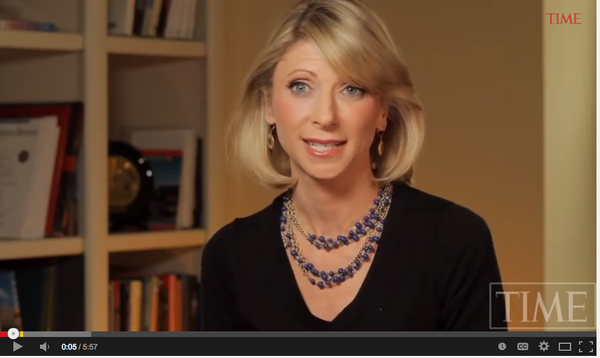
I’ll leave you with a fascinating talk by Amy Cuddy: she looked into the way our body-shape contributes to hormone levels, stress-response, and ultimately to the sense of self-confidence. Hmmmm, this makes me wonder what common "computer posture" is doing to our bodies. Enjoy!
In the next edition of Satori news we'll look at the Air element, do some breathing exercises, and discover the first of three body-mind principles, or Doshas. Here is the parting
quote:
"Most of us need to be given permission to switch from the doing to the being mode, mostly because we have been conditioned since we were little to value doing over being."
~ Jon Kabat - Zinn
|
|
|